2026-09-24 · Tom Reyes
Commercial Grease Trap Cleaning Schedules and Local Littleton Regulations
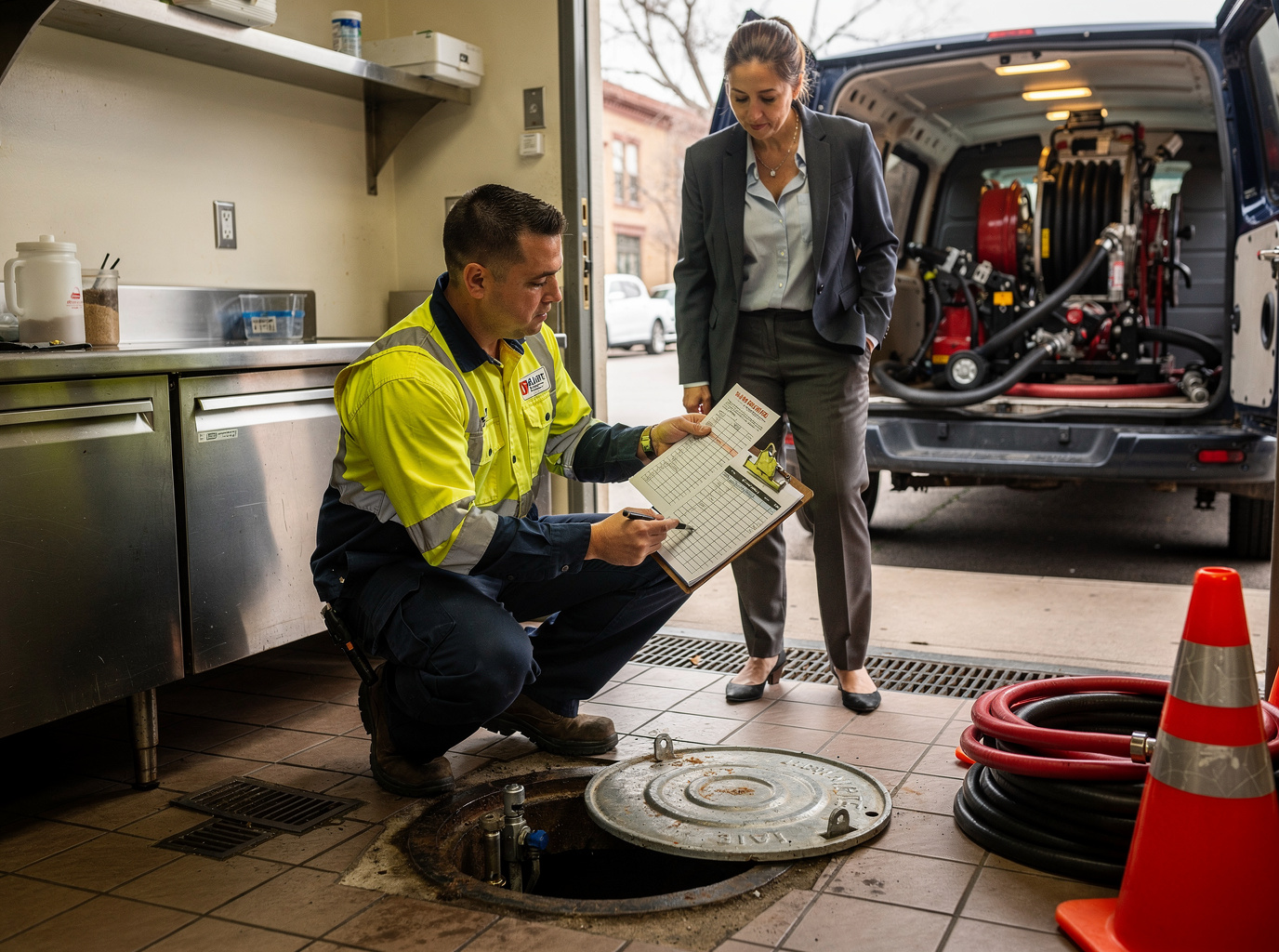
Commercial grease traps serving restaurants and food businesses in Littleton require pumping every 30 to 90 days. This range accounts for daily grease loads from high-volume kitchens in areas like Downtown Littleton and Historic Littleton, where older building stock often routes wastewater through smaller traps that fill faster during peak seasons.
Typical Cleaning Schedules for Commercial Operations
Restaurants near Littleton Town Hall or Bemis Public Library often see traps reach capacity quicker due to consistent lunch and dinner traffic. In Sterne Park and Bowles neighborhoods, newer commercial builds may handle 40- to 100-gallon units that still demand attention every 45 days when fryers and grills run daily. Winter months bring colder temperatures that cause grease to solidify faster in lines, shortening intervals compared to summer. Summer humidity stays low but outdoor events at Hudson Gardens can increase kitchen output. Owners track waste manifests to adjust from the base 60-day mark when volume spikes. Arapahoe County requires records of each service to confirm traps stay under 25 percent capacity before the next cycle begins.
Local Climate and Terrain Effects on Grease Accumulation
Littleton's semi-arid climate with four distinct seasons changes how grease moves through traps. Low humidity year-round reduces dilution from rainfall, so solids build up steadily in systems serving Columbine and Southpark. Spring snowmelt can raise groundwater around Wolhurst properties, pushing more water through commercial lines and carrying fats into traps at higher rates. Fall temperature swings cause grease to separate unevenly, requiring technicians to scrape baffles more thoroughly. These patterns mean a trap cleaned in March may need attention again by mid-May rather than the standard 90-day window. Soil in the region drains quickly, but commercial sites near South Santa Fe Drive often sit on clay pockets that slow effluent and increase the chance of backups if maintenance lags.
Arapahoe County and Littleton Compliance Steps
Businesses must follow Arapahoe County health department rules that limit grease discharge into municipal lines. Traps must be cleaned when floating grease reaches one-third of the total depth, with documentation kept for at least three years. In Historic Littleton, older plumbing sometimes connects directly to county mains, making regular service critical to avoid fines. Inspections focus on proper flow rates and cleanout access rather than trap size alone. Operators in Englewood and Denver border zones face similar rules, but Littleton enforcement ties records to business licenses. Scheduling service before holiday rushes prevents violations during busy periods when kitchens in Highlands Ranch and surrounding zones see extra demand.
Practical Maintenance Between Professional Visits
Daily scraping of strainers and weekly hot-water flushes help extend intervals between visits. Staff at locations near the Littleton Museum should log daily grease volumes to spot trends early. When baffles show heavy buildup or odors appear in restrooms, it signals the need for earlier pumping rather than waiting the full cycle. Linking service records to Grease Trap Cleaning ensures consistent tracking. Properties in Chatfield Bluffs or Sterling Ranch benefit from risers that allow faster access during winter when ground freezes. Consistent habits reduce emergency calls and keep operations within county limits without added cost.
Connecting Grease Trap Care to Overall Septic Health
Grease that escapes traps can reach septic tanks and reduce their effective volume over time. Common Septic Tank Problems: Broken Baffles, Cracks, and Pipe Failures explains how fats contribute to baffle damage in older Arapahoe County homes. Commercial sites that also have septic systems near Bow Mar should coordinate grease trap service with tank pumping to protect both components. This approach prevents solids from migrating to leach fields and keeps systems compliant with local health standards throughout the year.