2026-09-24 · Tom Reyes
How Often Should You Pump Your Septic Tank in Littleton, CO?
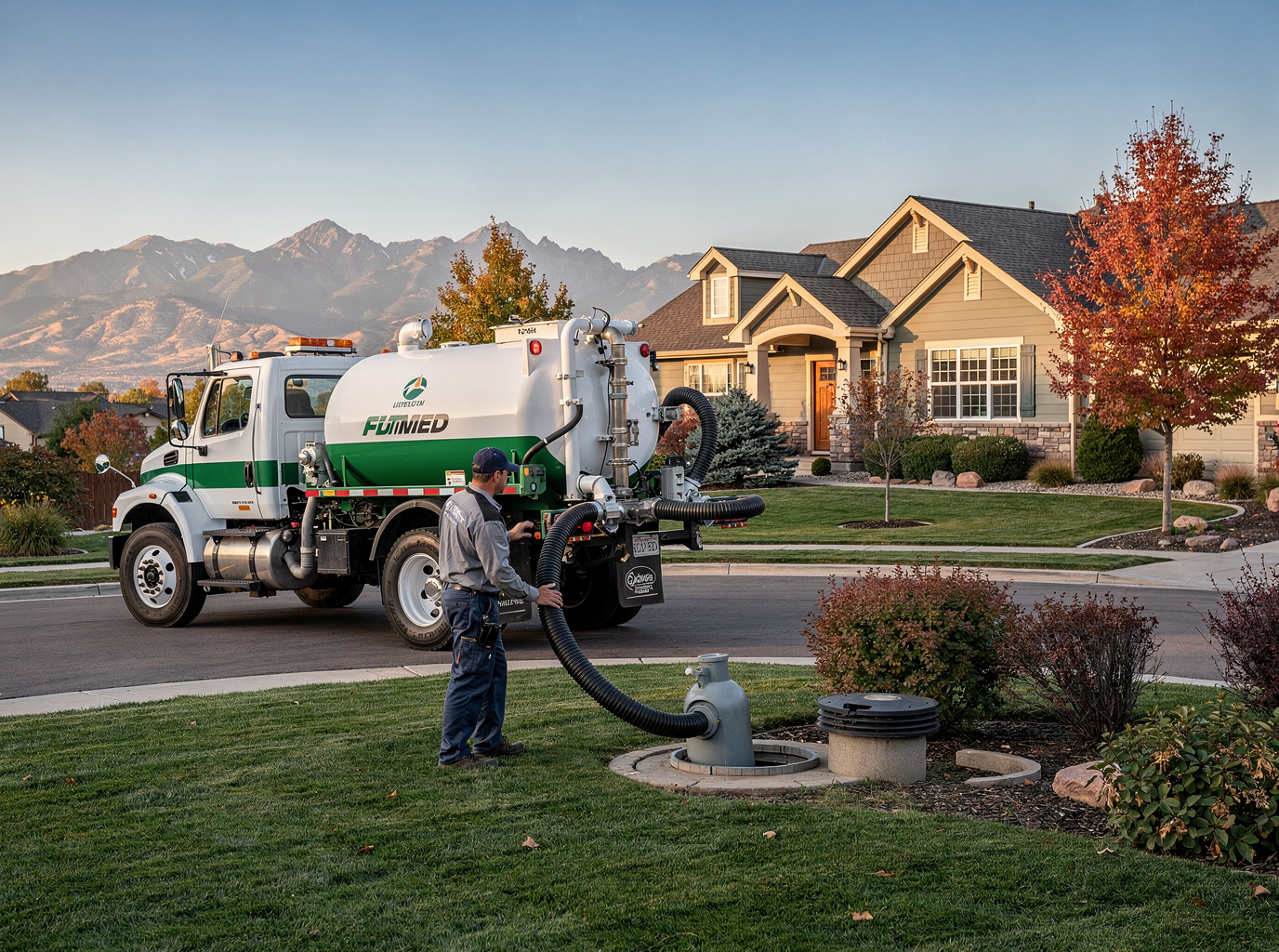
Most septic tanks in Littleton should be pumped every 3–5 years. Homes built before 1980 in Historic Littleton or near Littleton Town Hall often have smaller tanks that fill faster, while newer properties in Columbine or Wolhurst can sometimes stretch closer to 5 years when usage stays moderate.
Local Housing Stock and Tank Size in Arapahoe County
Littleton neighborhoods contain a wide mix of housing ages that directly affects pumping intervals. Properties around Bemis Public Library and Sterne Park frequently sit on 1,000-gallon tanks installed decades ago, while homes in Southpark or Bowles may have 1,500-gallon tanks from the 1990s. Older tanks reach capacity quicker because they hold less solids before the outlet baffle risks clogging. Newer construction near Hudson Gardens tends to include larger tanks and better baffles, but even these still require pumping on the 3–5 year mark when four adults live in the home. Soil conditions in Arapahoe County also play a role; clay-heavy areas slow drainage and cause solids to accumulate faster than in sandier zones near Chatfield State Park.
How Littleton Weather Patterns Change Pumping Needs
Semi-arid conditions with four distinct seasons and low humidity influence water use and therefore tank loading. During dry summers, irrigation increases wastewater volume, pushing tanks toward the upper end of the 3–5 year range. Winter freezes can slow bacterial activity inside the tank, leaving more undigested solids. Spring snowmelt around Sterne Park and the Littleton Museum often raises groundwater levels, which reduces drain-field absorption and forces more frequent pumping to prevent backups. Homeowners in Downtown Littleton who run multiple laundry loads during cold months commonly see their tanks reach capacity a year sooner than those who spread usage evenly across the year.
Warning Signs That Indicate Earlier Pumping
Slow drains in multiple fixtures, gurgling sounds from toilets, or odors near the tank lid all point to solids building up faster than the typical 3–5 year cycle. In neighborhoods like Columbine and Wolhurst, residents sometimes notice wet spots in the yard after heavy spring rains when the tank is overdue. These signs appear earlier in older homes near Littleton Town Hall because original tanks lack the capacity of modern installations. Checking the tank through a Septic Camera Inspection can confirm sludge depth without guessing. Waiting until sewage backs up into the house usually means the drain field is already stressed and may require Leach Field Repair in addition to pumping.
Practical Steps to Stay on Schedule
Track the last pumping date on a calendar and schedule the next service 3 years out for most Littleton homes, then adjust based on household size and observed water use. Keep records of any Septic Tank Repair work so future intervals can be refined. Avoid flushing wipes or pouring grease, both of which shorten the time between pumpings. Residents in Englewood or Highlands Ranch who commute daily often benefit from setting reminders tied to the start of each season rather than calendar dates alone. Consistent maintenance keeps the system functioning through the temperature swings typical of Arapahoe County.